Sorted Out
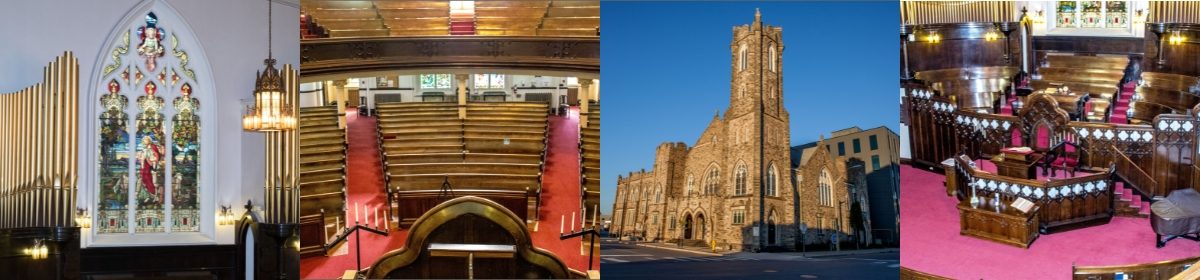
For those who are unaware, St. Andrew’s sits in Thunder Bay’s south end downtown core. Across the street is City Hall, a major bus transfer area, and a public library. It is also known to be an area when many unhoused people spend their time. They sit on the steps of our church, huddle in the bus shelters, particularly at night and when the weather is inclement, and tuck themselves into alcoves that might provide even a little protection and privacy.
Now this area of the city is not to be feared, but it is an area that one should be aware of their surroundings. There are times when horribly tragic things have happened. Over the years people have been harmed. Just this last week, a business owner a few blocks away was attacked and injured when opening his store one morning. But throughout this city, not just in our area, businesses, and people in general, are feeling the pressures of a desperate and hurting population of people who have not found help and healing for addictions and mental health issues.
A few of these people are resorting to doing desperate and terrible things. And this is not just a city of Thunder Bay problem. Globally the desperation is evident as we watch the news and the number of people who are on the move to find a better life and then find that life is difficult no matter where they hang their hats. If you have eyes to see and ears to hear, this is not news to you. But in the midst of this, people are compassionate, and though everyone likely has a right to be hardened, frustrated and angry, many choose kindness, compassion and care.
Almost daily there is a display of that kindness across the street from this church in the form of a security guard. Now that alone should tell you something. The public library ended up shutting down for a short time last year as they dealt with the safety and well-being of the staff after a significant safety incident. They had to find a way to protect staff yet allow this public space to continue to function as intended. The result was a security guard. But this is no ordinary security guard. His name is Bernie.
In the last months Bernie has become a fixture on the street outside the library. Rain, snow, cold temperatures, hot sun, really doesn’t matter. If the library is open Bernie is there. What is significant is that he is beloved. He is soft spoken, gentle, and kind. If you were to observe him in action it is action that exudes love. Not at all what one would expect from a security guard. Usually security guards, at least the ones may of us tend to encounter are those at stores who are there to discourage theft. Or they are the ones at airports that only rarely seem to smile.
But not Bernie. His smile beams. He knows the people who are on the street, and it is a rare moment when he is not in conversation with someone, checking in on them, or meeting them for the first time. His demeanor invites interaction. Though he has been hired by the library he makes all of us on this block feel more secure. I have learned that he carries around a roll of loonies so that if he finds someone’s meter has run out, he throws a Loonie in the meter. He has a box of handwarmers that he can hand out when he encounters someone who is cold. He chooses to be kind, pays attention, and is compassionate. His loving kindness brings a sense of community to our street.
Between him and Sheila, our custodian who also treats people on our part of the block with care, kindness, and generosity, one can witness compassion at its best. Now, you need to know that neither Bernie or Sheila are paid to be kind, they are paid to do their jobs. However, they extend the part of themselves that is naturally generous with time, energy, and resources, and it flow from them in the form of love. They don’t treat people with respect and care because they have to, but because it is a part of who they are.
These are the kind of people Jesus was talking about in this narrative about the sheep and the goats. It was the difference between people who pay attention and give of themselves to those who are most vulnerable and those who don’t. Now many sermons are such that you might be asked to consider whether or not you are a sheep or a goat. However, may I suggest that you don’t get too bogged down in trying to figure that out. In the time of Jesus, it was quite normal for a shepherd to have a mixed flock that included both sheep and goats. From my understanding, at night the sheep could graze and stay warm. The goats however needed more protection from the cold, so the shepherd would separate the sheep from the goats at night.
Besides if you go down the road of trying to figure out which you are, what you will likely find is that sometimes you are the caring one and sometimes you are not. And if you had not picked up on it yet, even in the story those who found themselves to be separated out as sheep and goats were as surprised as anyone to find themselves in one group or the other. They had no idea of what the master was talking about. Both asked, “When did we ever…”
The ‘sheep’ asked, “When did we ever see you hungry and feed you, thirsty and give you a drink? And when did we ever see you sick or in prison and come to you?”[1] The ‘goats’ also asked, “When did we ever see you hungry or thirsty or homeless or shivering or sick or in prison [but] didn’t help?”[2]
The difference was care and compassion, and this does not come naturally to us. When we are born, we are totally dependent on the care and compassion of another to make sure our needs are met. We don’t understand giving of ourselves. This is something we learn and keep learning. As Christians we continue this learning for a lifetime. That is why one can be a sheep or a goat. We are always learning more about what responding to the needs of others means. And on top of that, how to do so with an abundance of generosity and grace.
There is a caution here as well. Doing good works is not to come from a place where we think we have to be good to get into God’s good graces. I can tell you that none of us is deserving of God’s grace. All of us fall far short of being the image bearers of God we are called to be. None of us could ever be “good enough” because our human nature always contains seeds of despair, anger, jealousy, fear, and the ability to harm ourselves and others. We will always be people who don’t get it all right all of the time.
However, at our core we are made in the image of God and God is the God of love, we are created because of love outpoured. Theologian Lindsay Armstrong puts it this way,
God created the world out of an abundance of love. Like a bubbling fountain, God is love and overflows with love. In creation, God gives something of self, and in sending Jesus and the Holy Spirit, God repeatedly and generously pours love out upon all people, showing us God’s own self as well as who we are. Created in the image of this freely giving God, we freely share, because this is what it means to be created in God’s image. In particular, we love those conventionally considered unable to give back, and we do not do so to earn God’s love or anyone else’s love, to curry favor, or to make sure we are considered righteous at the end of time. We give as an expression of the love that is inside of us, bubbling up, spilling over, and flowing out.[3]
In other words, “We love because God first loved us.” (1 John 4:19) Loving others, not just those that are easy to love, “is a primary expression of our love of God and of our experience of God’s love for us.”[4]
This story of the sheep and the goats is often heard as a final judgement tale. It also comes after three very challenging parables about judgement. These are meant to wake us up to the people we are called to be as followers of Jesus and people who love God. All of these stories are told in the context of the whole of the Bible, including the Gospel of Matthew where God sends his one and only Son to be God with us, to live and die and rise again for our sake, so that love has the final word.
The question becomes, are you willing to live your life in the Spirit of Jesus, where love is the first response, justice for the most vulnerable is the goal, where hope resides, and grace is freely given? This is what separates the sheep from the goats. Where is your heart and how does your life bubble over with so much love for another human being, regardless of status and even more so when they are at their most vulnerable, and maybe even their ugliest, that they experience God’s love through and because of you?
This is not about putting yourself into unsafe situations. God wants you protected and loved as well. Still, this is about living in a way that love, grace, hope, joy, and peace are experienced in this world. Each of us can do that in small and big ways. We can do this in our individual lives, and we can do this as the church. We can do it from our homes, places of work and places of leisure. We can live this love on the streets and in buildings, to the point that wherever we go we bring so much love that things change, where even the air we breathe seems to change the people and situations around us. It may take time but with hopeful expectation let’s see what happens when God’s kingdom comes, and it comes through us.
I speak to you in the name of the Father, and of the Son, and of the Holy Spirit. Amen.
[1] The Message (MSG) Copyright © 1993, 2002, 2018 by Eugene H. Peterson.
[2] Ibid.
[3] Armstrong, Lindsay P. Feasting on the Word: Year A Volume 4 Season after Pentecost 2. Editors David L. Bartlett, and Barbara Brown Taylor. Westminster John Knox Press. Louisville. 2011. P335.
[4] Ibid.