Generational Praise
Generational Praise
Steadfast devotion, extraordinary faithfulness, enduring hope, a beautifully godly person. These words describe a woman in the Bible who we almost never pay attention to. Her counterpart, Simeon, almost always gets the air play as he shares the words in a song with Jesus’ parents that describe who their child is and what will be accomplished through Jesus. Of course, Simeon’s words are profound and stop Mary and Joseph in their tracks.
They were likely surprised and yet not, as this child had already brought angels and messengers to their lives. Yet, how Simeon would know this child held a promise would still have taken them aback. One part of Simeon’s song speaking about Jesus as God’s salvation and a God’ revealing light to non-Jewish nation and then another part about how they will experience the pain of a sword thrust through them. Sit with those words as parents of a newborn.
However, take a moment to listen again to the story of Anna. It is literally two verses long.
36-38 Anna the prophetess was also there, a daughter of Phanuel from the tribe of Asher. She was by now a very old woman. She had been married seven years and a widow for eighty-four. She never left the Temple area, worshiping night and day with her fastings and prayers. At the very time Simeon was praying, she showed up, broke into an anthem of praise to God, and talked about the child to all who were waiting expectantly for the freeing of Jerusalem.[1]
It is interesting how many details we are given about this woman. It signals something about paying attention to who she is as seldom are we given so much information in scripture about a woman in such a short passage. We learn that she is a prophet. That is a rare title given a woman in the Old or New Testaments. We know her father’s name along with her tribe. We know that she has been married and widowed, now over the age eighty-four. She was known to have never left the Temple area and worshipped God devotedly.
The only time we hear about Anna at all in worship is when this particular scripture is chosen for the Sunday after Christmas and that does not happen often. She just slides by us without much fanfare, which is interesting in that we do know considerably more about her than so many others.
So, what does Anna do that brings her recognition in that moment? Well, she shows up! She is present at the same time as Simeon. Where as Simeon speaks to Mary and Joseph about their child, Anna “broke into an anthem of praise to God and talked about the child to all who were waiting expectantly for the freeing of Jerusalem.”[2]
Anna lived in a time of Roman occupation. It was a time of hardship for the majority of the people, personally, financially, spiritually. The powers that be were keeping the people oppressed through forced obedience to laws and government. Those who had power kept the peace through coercion, subjugation, and intimidation. Into this came Simeon with his song about who this child is and then Anna proclaiming to any one who is the vicinity that the child that people were expecting and we could add, waiting for, the deliver of Jerusalem was born… was there in their presence.
Anna had spent years in prayer and fasting. She had been steadfast in her devotion and now this woman, who would have been a familiar face to many in the Temple, was most certainly drawing attention to herself in this moment for all to see and hear. And though her words were not recorded for us to read, we are told that her words, her joy, her praise, are what is noteworthy.
She does not come onto the scene meek and mild. She bursts onto the scene, breaking into an anthem of praise to God. You can imagine her going from person to person, group to group, talking to any and all about the child. This child she has never met before, but has hoped for, the child that she understands will be significant…life-changing…for the world as they knew it.
So at this time of year…after all the hurriedness and frantic schedule for so many of the weeks before Christmas, when the presents are unwrapped and the contents put away, the parties and feast are past, our homes become quiet, the Christmas music no longer fills the air and people and places are considering when to take down the Christmas decorations, the store shelves are ravaged and empty after the Boxing Day sales, and exhaustion fills the air…this is when Anna’s story brings new life to us.
Anna sings songs of praise. This is the time of year to continue singing and to praise. It sets the tone for what has been, all the waiting, the preparations, and now it is our response to praise God. The praising prepares us for what is ahead of us as we anticipate the new year. Whether your past year or years have been difficult or not, and whatever comes before us in the new year, we can praise God.
What is striking is that Anna praises God and looks to the future with anticipation even though she has known hardship and oppression and is now in old age. And maybe that is what makes her a wonderful example. She is a generational example of praise. She has seen the difficult parts of life; she has lived it and still praises God.
This story shows life in all of its stages…a baby to be dedicated to God, parents, the people of all ages who may have been present at the Temple, and them Simeon and Anna, seasoned, experienced, knowing the toll life can take and yet giving praise to God. They had to have been observant, in tune with the Holy Spirit, paying attention, wise, and have courage.
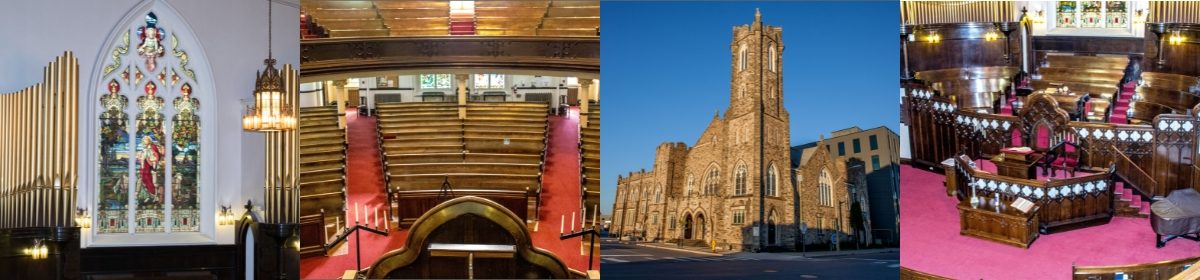
Today at St. Andrew’s in Thunder Bay we are witnessing the baptism of two preschool age girls and our scripture is about elderly people. We get to see and hear about the praise of all the generations. Old and young, wise and just learning. Psalm 148 is a song of praise, in it we hear, “Hallelujah!
Praise God from heaven, praise him from the mountaintops … Praise God from earth … Robust men and women in their prime, and yes, graybeards and little children.[3]
At this time of year, in whatever period of your life that you are in or what you are experiencing, you can never go wrong in praising God. Praise God for the good in your life. Praise God for being steadfast in the difficult times. Praise God when you have a hard time believing God is present and yet you trust God’s presence. Praising God is always in season and appropriate.
And don’t be mistaken, you can praise God and question God all at the same time. You can be happy, angry, frustrated, joy-filled, scared, and praise God. You can be sick, healthy, poor or stable, housed or unhoused and praise God. To praise God does not mean that you have everything together and in order. To praise God means that you trust, understand, and know that, even when you cannot understand the whys, you are able to trust God with your life. You can be young or old and anything in between and praise God.
Praising God is like gratitude in that it can transform every circumstance. It is not that what is happening changes, but we change. From the core of our being praising God, finding ways to give thanks that can bring hope, it can change how we process our situations, maybe even bring solace or solutions.
Today we give thanks for the baby that was recognized by Simeon and Anna as the one who would change the world and the lives of those who would believe. May we be people like Anna who learn steadfast devotion, extraordinary faithfulness, enduring hope, becoming beautifully godly persons in the process. Praise God from whom all blessings flow. Amen.
[1] The Message (MSG) Copyright © 1993, 2002, 2018 by Eugene H. Peterson
[2] Ibid.
[3] Ibid.
To download this sermon, click here.
Online Service
Worship Service in print